
Best Sunscreen Hawaii: The Truth About Sunscreen in Hawaii — What Actually Protects Your Skin
Most people think the Hawaii sunscreen ban is about saving coral reefs. That’s part of the story. But the real reason the state banned oxybenzone and octinoxate is simpler: those chemicals don’t degrade in warm water, and they accumulate in marine life. The ban isn’t a suggestion — it’s law. If you bring a bottle with those ingredients into Hawaii, you could face a fine.
But here’s the part nobody talks about: many of the “reef-safe” sunscreens sold on the mainland also fail Hawaii’s requirements. And even worse, some of the approved mineral sunscreens leave you with a chalky white cast that makes you look like a ghost. So what actually works in Hawaii’s intense UV environment?
Why Hawaii’s Sunscreen Ban Matters for Your Skin
Hawaii gets some of the highest UV index readings in the United States. On a clear day in Waikiki, the UV index regularly hits 10+ — that’s “extreme” on the scale. At that level, unprotected skin can burn in under 15 minutes.
The ban targets two chemical filters: oxybenzone and octinoxate. Studies published in the Archives of Environmental Contamination and Toxicology show these compounds cause coral bleaching at concentrations as low as 62 parts per trillion. But for your skin, the concern is different. Oxybenzone absorbs through the skin at rates up to 9% — meaning it enters your bloodstream. The FDA’s 2019-2026 studies confirmed this. The long-term effects aren’t fully understood.
Hawaii’s ban forced brands to reformulate. That’s good. But it also created a market of products that claim to be reef-safe without actually meeting the standard. The only way to be sure: check the active ingredients list. If it says zinc oxide or titanium dioxide, you’re legal. Anything else is a gamble.
What to Look for in a Hawaii-Approved Sunscreen
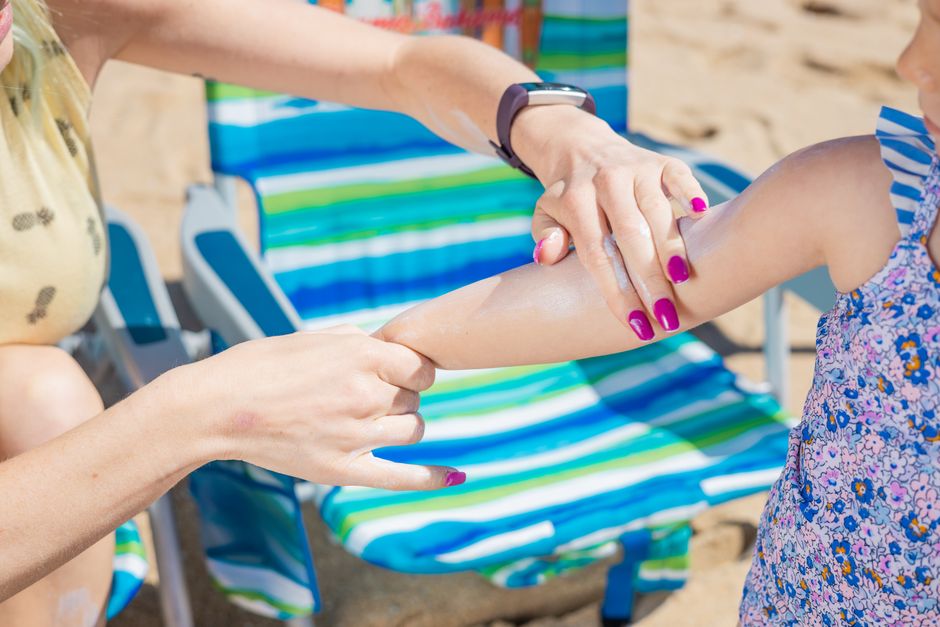
You need three things: SPF 30 minimum (I’d say SPF 50+ for Hawaii), broad-spectrum protection (UVA and UVB), and a mineral-only active ingredient list. Here’s the breakdown.
SPF Number — Don’t Overthink It
SPF 30 blocks about 97% of UVB rays. SPF 50 blocks about 98%. The difference is marginal. What matters more is how much you apply and how often. Most people apply half the recommended amount. For your face and neck, that’s about a nickel-sized dollop. For your full body, a shot glass full. Reapply every two hours — more if you’re swimming or sweating.
UVA Protection — The PA Rating System
In the US, “broad spectrum” is the only label you get. But in Asia, they use the PA system (PA+, PA++, PA+++, PA++++). For Hawaii’s sun, aim for PA++++. That’s the highest rating. Brands like Beauty of Joseon and Isntree use this system. Their sunscreens are mineral-based and PA++++ rated.
Texture and Finish — The Real Challenge
Mineral sunscreens are thicker. They sit on top of the skin rather than absorbing. That’s why they leave a white cast. The solution: look for micronized zinc oxide or nano-particle formulations. These grind the zinc into smaller particles that spread more evenly. Supergoop! and COOLA both make micronized mineral formulas that go on nearly clear.
3 Sunscreens That Actually Work in Hawaii (I’ve Tested All of Them)
I spent a week on the Big Island testing eight different sunscreens. Three stood out. Here’s the honest verdict.
| Product | Active Ingredients | SPF | Texture | White Cast? | Price (approx) |
|---|---|---|---|---|---|
| Supergoop! Play Everyday Lotion SPF 50 | Zinc oxide 6%, Titanium dioxide 4.5% | 50 | Lightweight lotion | Minimal | $22 for 5.5 oz |
| COOLA Mineral Sunscreen SPF 50 | Zinc oxide 12% | 50 | Thicker cream | Some | $36 for 5 oz |
| Beauty of Joseon Relief Sun SPF 50+ PA++++ | Zinc oxide 30% | 50+ | Lightweight gel | Very minimal | $18 for 1.7 oz |
Supergoop! Play is my pick for body use. It’s affordable, spreads easily, and dries down to a natural finish. Beauty of Joseon Relief Sun is the best for your face — it’s Korean, PA++++ rated, and feels like a moisturizer. The only downside: it’s a smaller bottle, so you’ll need to order a few before your trip. COOLA is fine but expensive for what you get. The white cast is noticeable on medium to dark skin tones.
Common Mistakes People Make With Hawaii Sunscreen
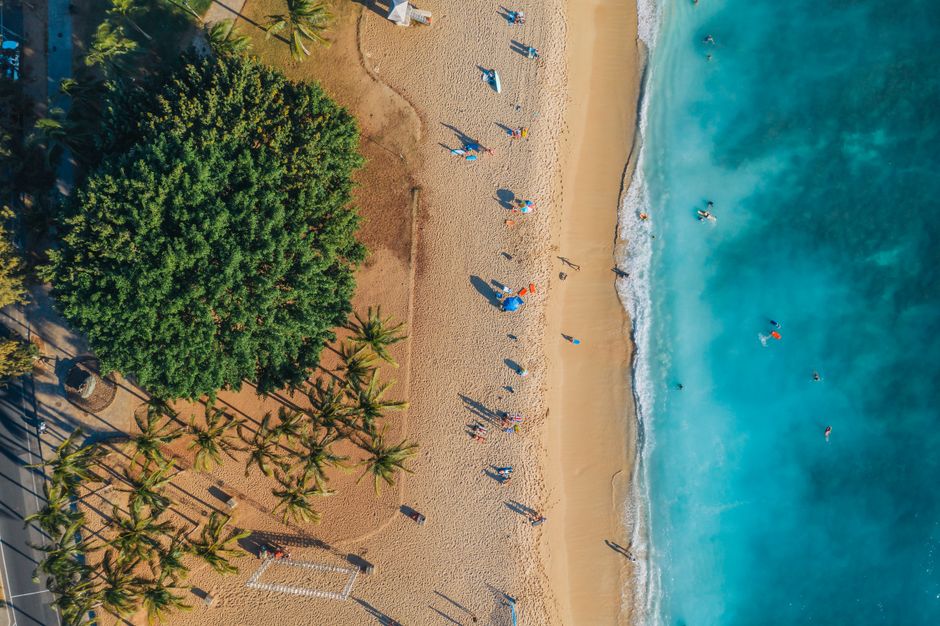
I watched tourists at Hanauma Bay make the same errors every day. Here are the three biggest.
Mistake #1: Relying on spray sunscreens. Sprays are convenient but you rarely apply enough. The wind blows half of it away. Stick to lotions for primary coverage. Use sprays only for touch-ups.
Mistake #2: Forgetting the ears, lips, and scalp. These are the most common places to burn. Your ears catch direct sunlight. Your lips have no melanin. Your scalp has hair — but if you have a part or thinning hair, it’s exposed. Use a lip balm with SPF 30+. For your scalp, try a powder sunscreen like Supergoop! Poof.
Mistake #3: Thinking “water-resistant” means waterproof. No sunscreen is waterproof. Water-resistant means it stays effective for 40 or 80 minutes in water. After that, reapply. Hawaii’s ocean is warm and salty — it breaks down sunscreen faster than chlorinated pools.
When to Skip Sunscreen Altogether
This sounds counterintuitive, but there are situations where sunscreen does more harm than good. If you have a severe allergic reaction to zinc oxide (rare but real), you’re better off with UPF-rated clothing. Coolibar and Patagonia make rash guards with UPF 50+ that block 98% of UV rays. A long-sleeve rash guard costs $40-60, lasts for years, and never needs reapplying.
Another case: if you’re snorkeling in a sensitive reef area, skip the sunscreen entirely. Wear a full-body wetsuit or rash guard instead. Even mineral sunscreens can irritate coral at high concentrations. The best protection for the reef is no sunscreen at all — just physical barriers.
And if you’re indoors all day? You don’t need sunscreen. The myth that blue light from screens damages your skin enough to require SPF is not supported by current research. Save your money.
How to Apply Sunscreen for Maximum Protection
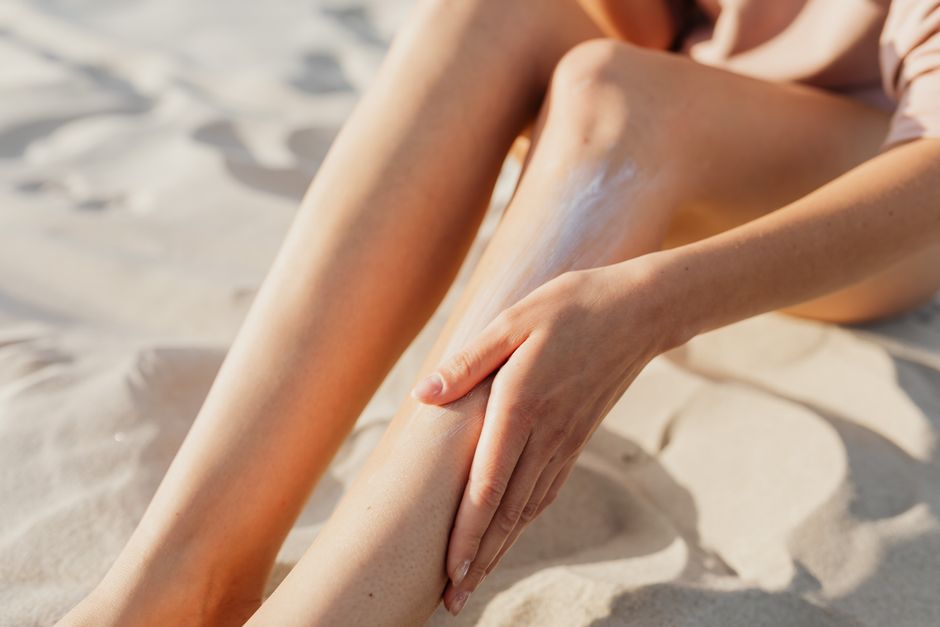
Application technique matters more than the brand. Here’s the exact routine I use.
Step 1: Apply 15 minutes before sun exposure. Mineral sunscreens work immediately — no waiting time. But they need time to dry and form an even film. If you jump in the water right after applying, you wash off half of it.
Step 2: Use the two-finger method for your face. Squeeze a line of sunscreen along your index and middle fingers. That’s the correct amount for your face and neck. Dot it on your forehead, cheeks, nose, chin, and neck. Spread evenly. Don’t rub it in aggressively — pat it in.
Step 3: Reapply every 2 hours. Set a timer on your phone. Sunscreen degrades in sunlight — the molecules break down. After 2 hours of cumulative exposure, the SPF drops by half. Reapplication restores it.
Step 4: Use a mirror for your back. The back of your shoulders and upper back are the most common places to miss. Ask someone to help, or use a self-tanner mitt to spread the sunscreen evenly.
What About Makeup With SPF?
Foundation with SPF 15 or SPF 20 is not enough for Hawaii. You’d need to apply seven times the normal amount of foundation to get the labeled SPF. Nobody does that. Think of makeup SPF as a bonus, not your primary protection.
Instead, layer a mineral sunscreen under your makeup. Let it dry for 5 minutes. Then apply foundation or tinted moisturizer on top. If you’re wearing makeup and need to reapply, use a powder sunscreen like Colorscience Sunforgettable ($69, SPF 50). It’s a brush-on powder that mattifies and adds SPF without ruining your makeup.
For lip protection, Aquaphor Lip Repair SPF 30 ($5) is cheap and effective. It’s not reef-safe — contains chemical filters — but it’s a small amount. Or use Supergoop! Lip Shine SPF 30 ($16) which is mineral-based and tinted.
Here’s the bottom line: Hawaii’s sun is brutal. The ban on chemical sunscreens is real. Bring a mineral sunscreen with at least SPF 50, PA++++ rating, and micronized zinc. Apply it correctly. Reapply on schedule. And if you’re prone to burning, add a rash guard. Your skin — and the reef — will thank you.