
Best Beauty Tools 2026: Clinical Performance and Home Device Technical Review
A prevailing misconception in the cosmetic industry suggests that at-home beauty tools are merely diluted, less effective versions of the machinery found in a dermatologist’s office or a high-end medical spa. This perspective ignores the rapid convergence of consumer electronics and clinical engineering that has characterized the market leading into 2026. While professional in-office treatments utilize higher power outputs that require medical supervision, the latest generation of consumer devices has optimized specific wavelengths and electrical frequencies to achieve cumulative results that, over time, can mirror clinical outcomes. The efficacy of a tool is no longer determined solely by its raw power, but by its ability to deliver consistent, targeted energy to the dermis without causing thermal damage or necessitating downtime.
Are high-frequency facial devices and LED masks worth the investment in 2026?
The primary hurdle for many consumers is distinguishing between devices that utilize evidence-based technology and those that rely on marketing-driven pseudo-science. In 2026, the market has bifurcated into professional-grade home systems and entry-level mass-market gadgets. Clinical data suggests that for LED (Light Emitting Diode) therapy to be effective, the proximity of the light source to the skin and the precision of the nanometer (nm) output are the two most critical variables. Cheap masks often use generic bulbs that emit a broad spectrum of light, which lacks the depth of penetration required to stimulate mitochondrial activity in the cells. In contrast, top-tier tools focus on specific red (633nm) and near-infrared (830nm) wavelengths, which have been shown in peer-reviewed studies to promote collagen synthesis and reduce inflammation.
CurrentBody Skin LED Light Therapy Mask (Series 2)
The CurrentBody Series 2 remains a benchmark for flexible LED technology. Retailing for approximately $380 (£300), this device uses medical-grade silicone to ensure the LEDs are in direct contact with the skin, minimizing light scatter. Its primary advantage is the inclusion of 132 LED bulbs calibrated to the 633nm and 830nm specifications. A significant pro is its proven track record in reducing fine lines by up to 35% over a 12-week period. However, a notable con is the proprietary charging cable, which can be difficult to replace if lost, and the lack of a blue light setting for acne treatment, necessitating a separate purchase for those with blemish-prone skin.
Dr. Dennis Gross DRx SpectraLite FaceWare Pro
Priced at roughly $455 (£350), this rigid mask offers a combination of 100 red lights and 62 blue lights. The inclusion of blue light (415nm) makes it a superior choice for users dealing with both aging concerns and adult acne. The primary benefit is the treatment time; it is programmed for a three-minute cycle, making it the most time-efficient high-end tool on the market. On the downside, the rigid plastic design does not conform to every face shape perfectly, which can lead to uneven light distribution for those with very narrow or very wide facial structures.
| Feature | CurrentBody Series 2 | Dr. Dennis Gross FaceWare Pro |
|---|---|---|
| Primary Wavelengths | 633nm (Red), 830nm (NIR) | Red, Blue, Infrared |
| Material | Flexible Silicone | Rigid Plastic |
| Treatment Time | 10 Minutes | 3 Minutes |
| Approximate Price | $380 | $455 |
Comparative analysis of professional-grade hair styling and drying tools
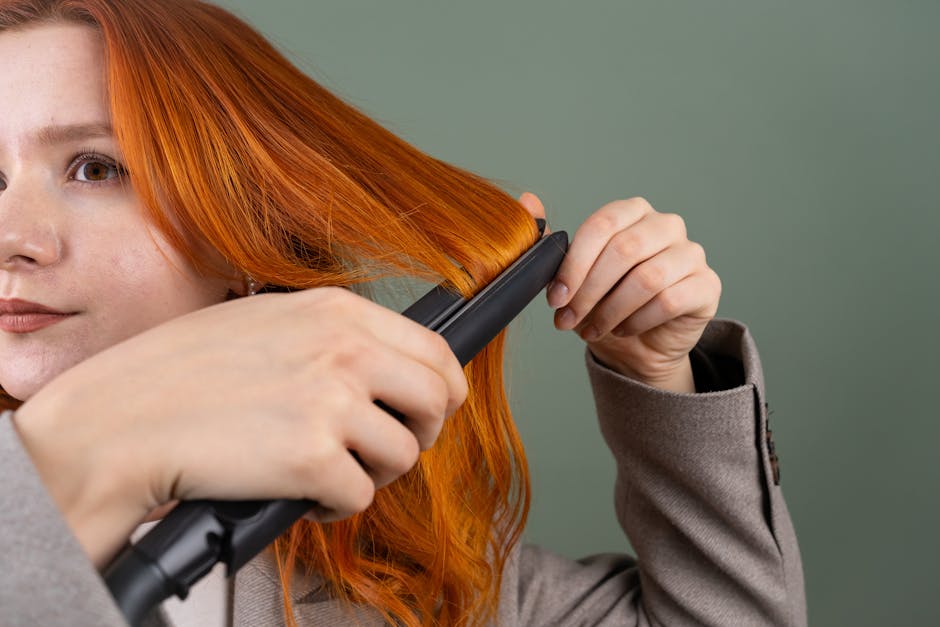
Hair tool technology in 2026 has moved beyond simple heat application. The focus has shifted toward air-velocity engineering and intelligent heat control systems that measure exit temperatures up to 100 times per second. The goal is to prevent the hair reaching its “glass transition temperature,” the point at which the internal structure of the hair fiber becomes permanently deformed. Modern tools utilize brushless digital motors that are smaller, lighter, and significantly quieter than the AC motors found in traditional dryers. This shift allows for more ergonomic designs that reduce wrist strain during long styling sessions.
Dyson Supersonic Nural
The Dyson Supersonic Nural represents the pinnacle of sensor-driven hair care, priced at approximately $499 (£400). It features a ToF (Time of Flight) sensor that automatically reduces heat as the dryer gets closer to the head, preventing scalp burns and over-drying. The technical advantage here is the preservation of the scalp’s moisture barrier, which is often neglected in traditional styling. A pro is the “attachment learning” feature, which remembers your preferred settings for each nozzle. The con is the high entry price and the learning curve associated with the high-velocity airflow, which can cause tangling if not used with the correct technique.
Shark SpeedStyle Pro Flex
Shark has positioned itself as a formidable competitor to Dyson by offering similar digital motor technology at a more accessible price point of $299 (£230). The SpeedStyle Pro Flex is notable for its foldable design, making it the superior choice for frequent travelers. It delivers a high-torque airflow that rivals more expensive models. The main pro is the value-to-performance ratio; it provides professional results without the $500 investment. However, the build quality feels slightly more plastic-heavy compared to the Dyson, and the noise profile is higher, producing a more high-pitched whine during operation.
For consumers seeking to finance these high-ticket items, many retailers listed on Awin-affiliated platforms like Boots or Currys offer interest-free installment plans. This can make the $500 investment more manageable by spreading the cost over 12 months, effectively matching the cost of a monthly salon blowout.
Microcurrent and EMS devices: Evaluating muscle toning vs. surface improvements
Microcurrent technology works by mimicking the body’s natural ionic flow to stimulate the facial muscles and promote ATP (adenosine triphosphate) production. It is often described as a “workout for the face.” However, it is essential to distinguish between Microcurrent and EMS (Electrical Muscle Stimulation). Microcurrent operates at a lower intensity and targets cellular repair and subtle lifting, while EMS causes visible muscle contractions and is more focused on significant sagging. By 2026, the most effective tools are those that allow the user to toggle between these frequencies depending on their specific needs for that day.
ZIIP Halo
The ZIIP Halo, priced at $349 (£280), is unique because it utilizes both microcurrent and nanocurrent. Nanocurrent operates at a much smaller scale and is designed for long-lasting results by working at the cellular level rather than just the muscular level. The device is app-connected, allowing users to sync specific “treatments” to the hardware. A major pro is the immediate “glow” effect often seen after a single use due to increased circulation. A con is the requirement for a conductive gel; without a thick layer of ZIIP’s proprietary (and expensive) gel, the device can cause an unpleasant stinging sensation.
NuFace Trinity+
The NuFace Trinity+ remains the most recognizable name in the category, retailing for about $395 (£315). Its modular design allows for interchangeable attachments, such as the “Effective Lip and Eye” (ELE) head. The primary pro is the ease of use; the three-button interface is intuitive, and the device is FDA-cleared for facial stimulation. The con is the battery longevity; many users report that the internal battery begins to lose its charge capacity after 18–24 months of daily use, and it is not user-replaceable.
- Microcurrent: Best for preventative aging and skin texture.
- Nanocurrent: Best for long-term cellular health and collagen maintenance.
- EMS: Best for addressing visible jowl sagging and heavy brows.
- Frequency of use: Most devices require 5 days a week for the first 60 days to see clinical results.
The rise of smart diagnostic tools and AI-driven skincare analysis
In 2026, the “tool” is no longer just the device that touches your skin; it is the software that analyzes it. Smart mirrors and high-resolution skin scanners have become the command center for home beauty routines. These devices use multispectral imaging to look beneath the surface of the skin, identifying UV damage, clogged pores, and dehydration levels before they become visible to the naked eye. This data-driven approach allows for a more reactive and precise application of active ingredients like retinol or vitamin C, ensuring that the user isn’t over-treating or under-treating their skin.
Simplehuman Sensor Mirror Hi-Fi Assist
This is not merely a magnifying mirror; it is a $400 (£320) diagnostic station. It features a lighting system that can simulate any environment, from a candlelit dinner to a bright office, but its real value lies in the integrated AI. When paired with its app, it tracks skin changes over time and suggests adjustments to your routine. The pro is the exceptional light quality (CRI of 95), which is the closest thing to natural sunlight. The con is the footprint; it is a large, heavy device that requires a dedicated space on a vanity and constant proximity to a power outlet.
SkinCeuticals Custom D.O.S.E. (At-Home Integration)
While originally an in-office service, 2026 has seen the release of home-integration kits that work with smartphone cameras to analyze skin and recommend specific serum formulations. While the “tool” here is your phone’s sensor, the technology behind the analysis is highly sophisticated. The benefit is a completely personalized skincare regimen. The downside is the cost of the specialized serums, which can exceed $150 per bottle, and the reliance on the quality of your phone’s camera for accurate results.
How to select beauty tools based on clinical data and skin safety
When investing in high-end beauty technology, the decision should be guided by three factors: FDA clearance (or local equivalent like CE marking), the availability of clinical white papers, and the cost of consumables. Many consumers fail to account for the ongoing cost of conductive gels, replacement filters, or proprietary serums. A device that costs $200 but requires $50 of gel every month will quickly become more expensive than a $500 device with no recurring costs. Furthermore, safety is paramount. Devices that use heat or electrical currents must have built-in safety shut-offs to prevent tissue damage.
Evaluating the Return on Investment (ROI)
To determine if a tool is worth the price, compare it to the cost of professional treatments. A series of six professional LED sessions can cost upwards of $600. An at-home mask like the CurrentBody Series 2 pays for itself within two months of consistent use. Similarly, a high-quality hair dryer like the Dyson can last five to seven years, reducing the need for professional blowouts. However, for tools like microcurrent, the ROI is only realized if the user is disciplined enough to use it daily. Unlike a professional filler injection which lasts six months, microcurrent results dissipate within 48 to 72 hours if the routine is stopped.
In 2026, the best beauty tools are those that integrate seamlessly into a lifestyle while providing measurable, data-backed improvements. Whether you are looking to mitigate the effects of environmental aging or simply reduce the time spent on daily grooming, the current landscape of beauty technology offers professional-grade solutions that were unimaginable just a decade ago. Focus on the specifications—nanometers, motor wattage, and microampere levels—rather than the aesthetic design of the box. True beauty tech is an exercise in engineering, and the most effective tools are those that prioritize the science of the skin over the trends of the moment.