The Korean Makeup Tutorial That Actually Works for Western Faces
You’ve watched the videos. The flawless glass skin. The perfect gradient lip. The subtle, barely-there eye makeup that somehow makes the eyes look huge. Then you try it on your own face, and something looks… off. The foundation looks flat. The lip stain feathers. The eye makeup disappears.
That’s not your fault. Most Korean makeup tutorials assume a specific facial structure — higher cheekbones, a flatter nose bridge, monolids or double eyelids with a specific crease depth. Western faces have deeper eye sockets, more prominent brow bones, and different skin undertones. The techniques still work, but they need translation.
This isn’t a list of products to buy. It’s a guide to the five core Korean makeup techniques and exactly how to modify each one for a Western face shape, skin tone, and feature set. No guesswork.
Glass Skin: The Base That Breaks Most Western Routines
Glass skin — that hyper-hydrated, reflective, poreless finish — is the foundation of every Korean makeup look. But the standard method fails on Western skin for one reason: texture mismatch.
Korean glass skin relies on seven-plus layers of lightweight hydration, then a thin, dewy foundation. This works beautifully on skin with minimal pore size and low sebum production. On skin with larger pores, visible texture, or oilier T-zones, those layers slide off by noon.
Here’s what actually works.
Prep: Hydrate, Don’t Overload
Skip the seven-step toner routine. Two layers of a hydrating toner — something like the Pyunkang Yul Essence Toner ($18, 200ml) or Isntree Hyaluronic Acid Toner Plus ($16, 200ml) — patted in with hands, not cotton pads. Then one layer of a lightweight gel moisturizer. The SoonJung 2x Barrier Intensive Cream ($12, 60ml) works well here because it’s occlusive without being greasy.
Wait two minutes. Then apply a tone-up cream only where you need it — the center of the face, not all over. The Dr. Jart+ Cicapair Tiger Grass Color Correcting Treatment ($52, 50ml) cancels redness and adds a subtle luminosity without the chalky cast many tone-up creams leave on medium-to-deep skin tones.
Foundation: Thin, Targeted, Not All-Over
Korean cushion foundations are designed for even, light coverage. On Western faces, applying them all over flattens the natural contours. Instead, apply cushion foundation only to the center of the face — forehead, nose, chin, and inner cheeks. Blend outward with a damp sponge, leaving the perimeter bare. This preserves your natural bone structure and prevents that mask-like look.
The Laneige Neo Cushion Glow ($38, refill $25) in shade 21N or 23N works for fair-to-light skin. For medium-to-tan skin, the Clio Kill Cover Founwear Cushion ($28) in shade 4 Ginger or 5 Sand offers better undertone matching without turning gray.
Key spec: Most Korean cushions have SPF50+ PA+++. That’s real sun protection, not marketing. The Laneige Neo Cushion Glow uses a mineral-based filter that doesn’t sting eyes.
Why the Gradient Lip Fails on Fuller Lips (and How to Fix It)
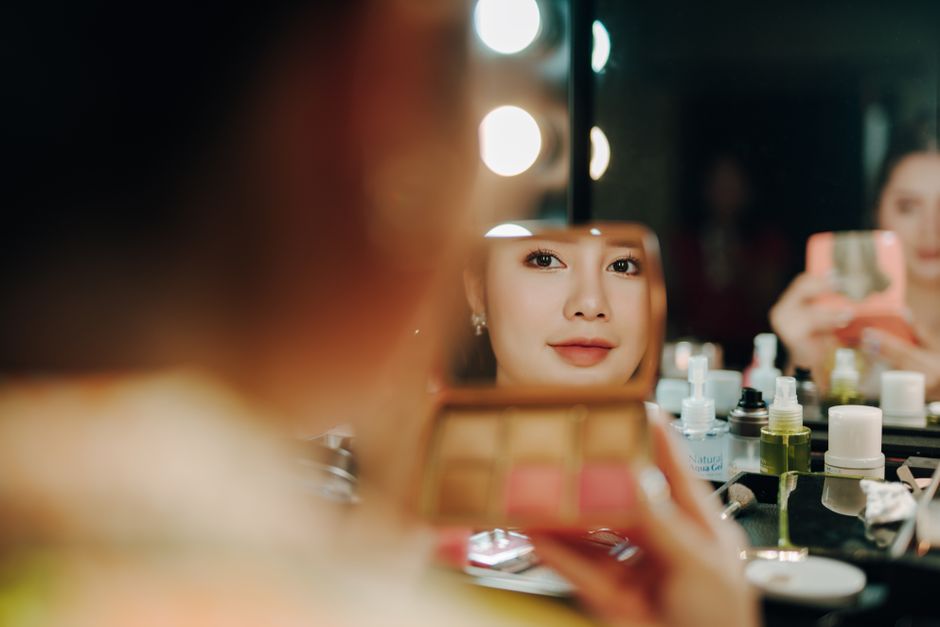
The gradient lip — dark color in the center, fading to nothing at the edges — is a signature K-beauty look. On thinner lips, it creates the illusion of fullness. On fuller Western lips, it looks like you ate a popsicle and forgot to wipe your mouth.
The problem is placement. Korean tutorials show the color concentrated on the inner third of the lip. On lips with more vertical height, that concentrated patch sits too far back, creating a dark hole effect.
Fix: Apply the stain to the entire inner half of the lip, not just the center. Then blur outward with your fingertip until the color gradient covers about 70% of the lip surface. The outer 30% should be bare or covered with a clear balm.
Best products for this technique:
- Peripera Ink the Velvet ($8, 8ml) in shade 08 Bittersweet or 18 Rose Morning — a lightweight velvet stain that dries down matte but doesn’t crack. Apply, wait 30 seconds, then blot with a tissue for the most natural fade.
- Romand Juicy Lasting Tint ($10, 5.5g) in shade 07 Jujube or 25 Bare Grape — a glossy water stain that leaves a sheer tint behind after the gloss wears off. Better for dry lips.
- Etude House Dear Darling Water Gel Tint ($6, 9ml) in shade PK003 Red Bean Red — the most affordable option. Fades evenly over eight hours, no patchiness.
Verdict: For fuller lips, skip the gradient lip entirely and do a blurred lip instead — same stain, but blended across the entire lip surface with a fingertip until the edges are soft and undefined. It’s more forgiving and looks intentional.
The Aegyo Sal: Undereye Brightening That Actually Looks Natural
Aegyo sal — the small fatty deposit under the lower lash line that creates a “smiling eye” effect — is one of the most misunderstood Korean makeup techniques. Western tutorials often show people drawing a harsh white line under the eye, which looks like concealer that settled into a crease.
Real aegyo sal makeup uses shadow, not highlight. You create the illusion of a puff by shading below it, not by drawing on top of it.
The Correct Technique
Take a small, flat eyeshadow brush and a matte brown shadow one shade darker than your skin. Smile slightly to locate the natural undereye puff. Then draw a thin, soft line in the crease below that puff, not on the puff itself. Blend downward with a clean brush until the line is a whisper. Then — and only then — tap a tiny amount of shimmer shadow onto the puff itself.
The 3CE Multi Eye Palette ($38, 9g) in shade Overtake has the perfect matte brown for this (shade 5, a neutral taupe) and a subtle champagne shimmer (shade 2) for the highlight. For a cheaper option, the Etude House Play Color Eyes ($14, 8g) in shade Caffeine or Rose Wine works similarly.
Mistake to avoid: Do not use white or silver shimmer. It reflects light unnaturally and makes the undereye look swollen. Stick to champagne, peach, or soft gold tones.
Eyeliner: The Puppy Eye vs. The Cat Eye — Which One for Deep-Set Eyes?
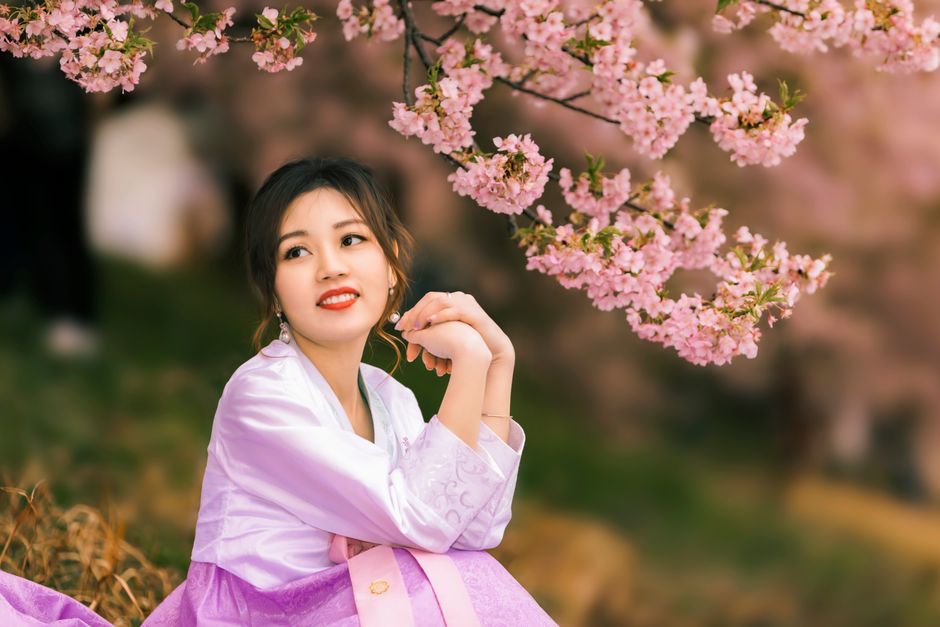
Korean eyeliner trends alternate between two shapes: the puppy eye (liner that follows the natural lash line downward at the outer corner) and the cat eye (liner that flicks upward). Western tutorials almost always recommend cat eyes. That’s wrong for many face shapes.
Deep-set eyes — where the brow bone protrudes over the eye socket — are common in Western faces. A cat eye flick on deep-set eyes gets hidden under the brow bone when you look straight ahead. You can’t see it. The puppy eye, by contrast, pulls the eye shape downward and outward, making it visible from any angle.
Hooded eyes — where the skin of the upper brow droops over the crease — also benefit from the puppy eye. A cat eye flick on hooded eyes creates a jagged, broken line because the hooded skin interrupts the wing.
Here’s a quick comparison:
| Eye Shape | Best Liner Style | Why | Product Recommendation |
|---|---|---|---|
| Deep-set | Puppy eye | Visible from all angles; doesn’t get lost under brow bone | Clio Sharp So Simple Waterproof Pencil Liner ($10, 0.14g) in shade 1 Black — precise, doesn’t smudge for 12 hours |
| Hooded | Puppy eye | Wing doesn’t break; line stays smooth | Etude House Oh M’Eye Line ($6, 0.5g) in shade BK801 — brush tip, ultra-fine, dries in 10 seconds |
| Monolid | Cat eye (thin) | Opens the eye; wing visible above lid | MAC Cosmetics Fluidline Gel Liner ($22, 3g) in Blacktrack — gel formula won’t transfer to upper lid |
| Round / Almond | Either | Both shapes work; choose by desired effect | Any of the above based on your specific shape |
Verdict: If you have deep-set or hooded eyes, stop forcing the cat eye. The puppy eye is more flattering, easier to apply, and stays visible. It also looks softer and more approachable — which is the entire point of Korean makeup aesthetics.
Why Blush Placement Changes Your Entire Face Shape
Korean blush placement has shifted dramatically in the last five years. The old method — blush high on the cheekbones, blended toward the temples — is Western standard. The current Korean method places blush low and forward, on the apples of the cheeks, blended toward the nose.
This changes the perceived width of the face. High blush lifts the face visually. Low blush shortens the mid-face and creates a softer, rounder appearance. For long or narrow Western faces, low blush can balance the proportions. For round or wide faces, high blush is still better.
For long faces (forehead to chin distance > cheekbone width): Place blush on the apples of the cheeks, blended no higher than the bottom of the nose. Use a cream blush for a natural, skin-like finish. The 3CE Take a Layer Multi Pot ($20, 5g) in shade Common Time (a muted peach) or Cabbage Rose (a soft pink) blends easily with fingers and doesn’t disturb foundation underneath.
For round faces (cheekbone width ≈ face height): Place blush on the upper cheekbones, blended toward the temples. Use a powder blush for better staying power. The Innisfree No Sebum Mineral Powder Blush ($11, 8g) in shade 1 Peach Coral or 2 Sweet Pink has a silky texture that doesn’t emphasize pores.
For square faces (strong jawline, forehead and jaw similar width): Place blush on the outer third of the cheekbones, blended in a diagonal line toward the ear. This softens the jawline by drawing the eye upward. The NARS Blush ($32, 4.8g) in shade Orgasm or Madly works for all skin tones and has a subtle gold shimmer that catches light nicely.
Key spec: Cream blushes last 6-8 hours on normal-to-dry skin. Powder blushes last 8-10 hours on oily skin. Layering a cream blush under a powder blush in the same shade gives you 12+ hours of wear.
The Five Biggest Mistakes People Make When Trying Korean Makeup

After watching dozens of tutorials and testing techniques on different face shapes, these are the consistent failure points.
1. Using too much base product. Korean makeup is about skin, not foundation. If you can feel the foundation on your face, you used too much. One pump of cushion foundation, pressed in with a damp sponge, is enough for the entire face. Build coverage only where needed — usually around the nose and inner cheeks.
2. Matching foundation to the wrong undertone. Korean foundations run pink-to-neutral. Western skin often has yellow or olive undertones. A pink-based Korean foundation on yellow undertones looks ashy. The Missha M Perfect Cover BB Cream ($16, 50ml) in shade 27 (for light-medium with yellow undertones) or 31 (for medium with golden undertones) is one of the few Korean base products that works across a wider spectrum. Test on your jawline, not your hand.
3. Skipping the setting spray. Korean makeup is designed for humidity. In dry climates or heated indoor spaces, the layers can separate within four hours. A fine-mist setting spray like MAC Prep + Prime Fix+ ($33, 100ml) or the cheaper Etude House Face Blur Fixing Mist ($9, 75ml) locks everything together without adding shine.
4. Overdoing the aegyo sal highlight. If people can see the shimmer from across the room, you used too much. The highlight should be visible only in direct light, from about an arm’s length away. Less is genuinely more here.
5. Ignoring the brows. Korean brows are straight, soft, and slightly thicker. Western arched brows clash with the soft, rounded aesthetic of Korean eye makeup. You don’t need to change your brow shape permanently, but softening the arch with a tinted brow gel makes the whole look cohesive. The Etude House Drawing Eye Brow ($4, 0.25g) in shade 3 Gray Brown or 4 Dark Brown fills sparseness without looking drawn-on.
How to Build Your Own Korean-Inspired Routine in 10 Minutes
You don’t need the full 12-step routine. Here’s a compressed version that hits the key visual effects — glass skin, bright eyes, soft lips — in under 10 minutes.
Minutes 0-2: Prep
Splash face with water. Pat on two layers of hydrating toner. Apply a pea-sized amount of gel moisturizer. Wait 60 seconds for absorption.
Minutes 2-4: Base
Apply tone-up cream to center of face (skip if you have oily skin). Apply cushion foundation to center of face only, blending outward. No concealer unless you have a specific spot to hide — the cushion coverage is enough.
Minutes 4-6: Eyes
Apply a single matte shadow in a neutral brown across the entire lid, from lash line to crease. No blending needed — one swipe. Draw a thin line of brown eyeliner along the upper lash line, stopping at the outer corner (puppy eye style). Curl lashes. Apply one coat of mascara to upper lashes only.
Minutes 6-8: Cheeks and Lips
Apply cream blush to the apples of the cheeks (or higher, depending on your face shape). Tap a lip stain onto the inner half of the lips, then blur outward with a fingertip. Apply clear balm over the entire lip.
Minutes 8-10: Set
One spray of setting mist from arm’s length. Let it dry naturally — don’t fan or blot. Done.
Product list for this routine (total cost: ~$70):
- Pyunkang Yul Essence Toner ($18, 200ml) — lasts 4-5 months
- Laneige Neo Cushion Glow ($38, includes refill) — lasts 2-3 months
- Etude House Oh M’Eye Line ($6, 0.5g) — lasts 3-4 months
- Peripera Ink the Velvet ($8, 8ml) — lasts 4-5 months
That’s $70 for a complete routine that lasts a quarter of a year. Most Western makeup routines cost twice that for the same number of products.
Korean makeup isn’t about owning a hundred products. It’s about using the right five products in the right order, on the right parts of your face. Once you adapt the techniques to your actual features, the look comes together in minutes, not hours.