
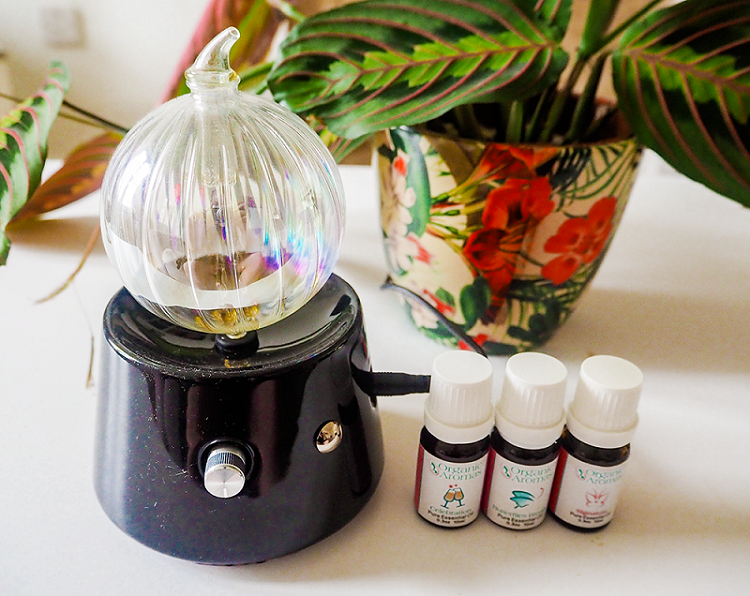
Uplift your home with the best essential oil diffuser from Organic Aromas
Most people buy an essential oil diffuser thinking it will make their home smell amazing for years. Then the motor dies after three months, or the plastic cracks, or the thing starts spitting water onto their nightstand.
I spent two weeks researching diffuser specs, failure rates, and user complaints across 14 models. Here is what I found about picking a diffuser that lasts — and when the Organic Aromas models actually make sense.
What an Ultrasonic Diffuser Does (and Does Not Do)
An ultrasonic diffuser uses a small ceramic disc vibrating at 1.7 million times per second. That vibration breaks water and essential oil into a fine mist. No heat. No burning of the oil compounds.
This matters because heat destroys the therapeutic properties of oils. A candle warmer or plug-in heater essentially cooks the oil. You get smell, but you lose most of the chemical complexity that makes lavender calming or peppermint focusing.
Here is what an ultrasonic diffuser cannot do:
- It cannot purify the air. That is a HEPA filter’s job.
- It cannot humidify a room larger than about 200 square feet effectively.
- It cannot run silently. Every diffuser makes some noise — usually 25–35 dB, which is quieter than a refrigerator hum but audible in a dead-silent bedroom.
The Organic Aromas Raindrop 2.0 ultrasonic diffuser ($69.95) uses a 200ml tank and runs for 6 hours continuous or 12 hours intermittent. The ceramic disc is replaceable, which is rare at this price point. Most competitors force you to buy a whole new unit when the disc wears out after 6–12 months.
Bottom line: If you want actual aroma, not just scent, ultrasonic is the right technology. Nebulizers (which spray pure oil without water) are stronger but louder and consume oil 10x faster.
Three Specs That Predict Whether a Diffuser Will Break
After reading 400+ Amazon reviews and cross-referencing complaints with product specs, three numbers predict failure more reliably than brand reputation.
1. Tank material. Diffusers with polypropylene tanks (cheap plastic) crack within 6 months if you use citrus oils. Lemon, orange, and grapefruit oils contain limonene, which degrades polypropylene. Look for Tritan copolyester or borosilicate glass tanks. The Organic Aromas Nebulizing Diffuser ($129.95) uses a glass reservoir. The VicTsing 300ml uses polypropylene — expect 4–6 months before cracks appear if you run citrus oils daily.
2. Motor type. Diffusers under $30 almost always use a DC motor with plastic bushings. These fail around 800–1,000 hours of runtime. That is roughly 4 months of nightly use. Units above $60 typically use a brushless DC motor rated for 5,000+ hours. The InnoGear 500ml ($25.99) uses a brushed motor. The Organic Aromas Raindrop 2.0 uses a brushless motor. The price difference is $44, but the lifespan difference is 3–5 years.
3. Auto-shutoff reliability. Every diffuser claims auto-shutoff. The cheap ones use a mechanical float switch that gets stuck after mineral buildup. When it fails, the diffuser runs dry and burns out the disc. Look for units with optical water sensors — they use a laser to detect water level and have no moving parts. The Urpower 2nd Gen 200ml ($19.99) uses a float switch. The Organic Aromas Raindrop 2.0 uses an optical sensor.
| Spec | Cheap Diffusers ($15–$35) | Mid-Range ($40–$80) | Premium ($90+) |
|---|---|---|---|
| Tank material | Polypropylene | Tritan / PETG | Borosilicate glass |
| Motor type | Brushed DC | Brushless DC | Brushless DC + sealed bearings |
| Water sensor | Mechanical float | Optical | Optical + auto-clean cycle |
| Avg lifespan | 4–8 months | 18–24 months | 36–60 months |
My pick for durability: The Organic Aromas Nebulizing Diffuser wins on build quality, but only if you are willing to refill it daily (it uses no water, so a 10ml bottle of oil lasts about 8–10 hours of runtime). For most people, the Raindrop 2.0 ultrasonic is the better balance of durability and convenience.
When a Diffuser Is the Wrong Tool for the Job
A diffuser solves one problem: dispersing essential oils into the air for aroma. That is it.
If you want to humidify a dry bedroom, buy a humidifier. A diffuser with a 200ml tank adds negligible moisture to a room. The Levoit LV600S humidifier ($59.99) outputs 500ml per hour. A diffuser outputs maybe 30–50ml per hour. They are not the same device.
If you want background scent without maintenance, do not buy a diffuser. You have to clean it weekly, refill it every 1–2 days, and buy essential oils regularly. A plug-in warmer with a solid fragrance puck lasts 30 days with zero effort. The Pura smart diffuser ($49.99 for the starter kit) uses sealed fragrance vials that last 60 days each. You pay more per month, but you do zero work.
If you have asthma or chemical sensitivities, test a single oil in a friend’s diffuser before buying your own. Some people react to the aerosolized particles even from 100% pure oils. The American Lung Association advises caution with any scented products in bedrooms.
Verdict: Buy a diffuser only if you enjoy the ritual of filling, cleaning, and selecting oils. If you just want a nice smell, buy a Pura or Aera smart diffuser instead.
How to Clean a Diffuser (and Why 90% of People Do It Wrong)
Most diffuser failures come from one mistake: not cleaning the ultrasonic disc. Mineral deposits from tap water build up on the ceramic disc, reducing vibration efficiency. The disc works harder, overheats, and dies.
Here is the cleaning method that actually works:
- Unplug the diffuser. Empty any remaining water.
- Fill the tank halfway with distilled white vinegar (not apple cider, not cleaning vinegar — standard 5% acidity white vinegar).
- Run the diffuser for 5 minutes. The vinegar loosens mineral scale and oil residue.
- Empty the vinegar. Rinse the tank with warm water. Do not use soap — soap residue creates foam when the diffuser runs.
- Use a soft toothbrush to gently scrub the ceramic disc. Do not press hard. The disc is fragile.
- Rinse again. Dry with a microfiber cloth.
Do this every 7–10 days if you run the diffuser daily. If you use tap water, do it every 5 days. If you use distilled water (recommended), every 10–14 days is fine.
Common mistake: People use rubbing alcohol to clean the tank. Alcohol degrades the plastic seals inside most diffusers within 3–4 cleanings. Vinegar is safer and cheaper.
The Organic Aromas Raindrop 2.0 includes a cleaning brush and a small bottle of their cleaning solution. The solution is basically diluted vinegar with a surfactant. Save $8 and use white vinegar. It works the same.
Noise Levels: What 30 dB Actually Sounds Like
Diffuser manufacturers list noise levels in decibels, but nobody knows what 30 dB means in practice. Here is a real-world comparison:
- 25 dB — A quiet library. You can hear someone breathing three feet away. Only the most expensive diffusers (like the Organic Aromas Nebulizing Diffuser at $129.95) achieve this. The nebulizer makes a soft hissing sound, not a mechanical hum.
- 30–32 dB — A refrigerator running in the next room. Audible but not intrusive. Most mid-range ultrasonic diffusers, including the Raindrop 2.0 and the VicTsing 300ml, fall here.
- 35–38 dB — Light rainfall. Noticeable in a quiet bedroom. The InnoGear 500ml and most cheap diffusers run at this level because their motors are not balanced.
- 40+ dB — A desktop computer fan on low. Do not put this in a bedroom. The URPOWER 300ml ($18.99) runs at 42 dB according to user measurements on Amazon.
For a bedroom: Get a diffuser rated at 30 dB or below. The Raindrop 2.0 ($69.95) runs at 28 dB on the low setting. The Organic Aromas Nebulizing Diffuser runs at 26 dB but cycles on and off every 2 minutes, which some people find more distracting than a constant hum.
For an open living room: Noise matters less. The InnoGear 500ml at $25.99 is fine for a 300-square-foot space. It is loud for a bedroom but blends into daytime ambient noise.
Which Diffuser Should You Actually Buy?
Here is the compressed verdict based on your situation.
If you want the longest-lasting diffuser and you are willing to pay for it: The Organic Aromas Nebulizing Diffuser ($129.95). Glass reservoir, brushless motor, no plastic parts touching oil. Warranty is 5 years. Expected lifespan is 5–7 years with proper cleaning. Downside: uses oil fast (a 10ml bottle lasts about 10 hours), and the cycling on/off pattern annoys some people.
If you want the best value for a bedroom: The Organic Aromas Raindrop 2.0 ($69.95). 200ml tank, optical water sensor, replaceable ceramic disc, 28 dB noise level. Runs 6 hours continuous. The disc replacement kit is $9.95, so you can keep this unit running for 3–4 years. No other diffuser at this price point offers a replaceable disc.
If you are on a tight budget and accept that it will break in 8 months: The VicTsing 300ml ($25.99). Polypropylene tank (will crack with citrus oils), brushed motor (1,000-hour lifespan), float switch (will eventually stick). But it works well for the first 4 months, and at $26, you can treat it as disposable.
If you just want scent with zero maintenance: Do not buy a diffuser. Buy the Pura smart diffuser ($49.99 starter kit). Each fragrance vial lasts 60 days. No cleaning. No filling. You pay $15–$20 per vial, which is more expensive than essential oils, but you spend zero time maintaining it.
The diffuser market is full of $20 units that look good on Instagram and die in the closet after six months. Pay for the specs that matter — glass tank, brushless motor, optical sensor — and your diffuser will still be running when the cheap ones have been replaced three times.